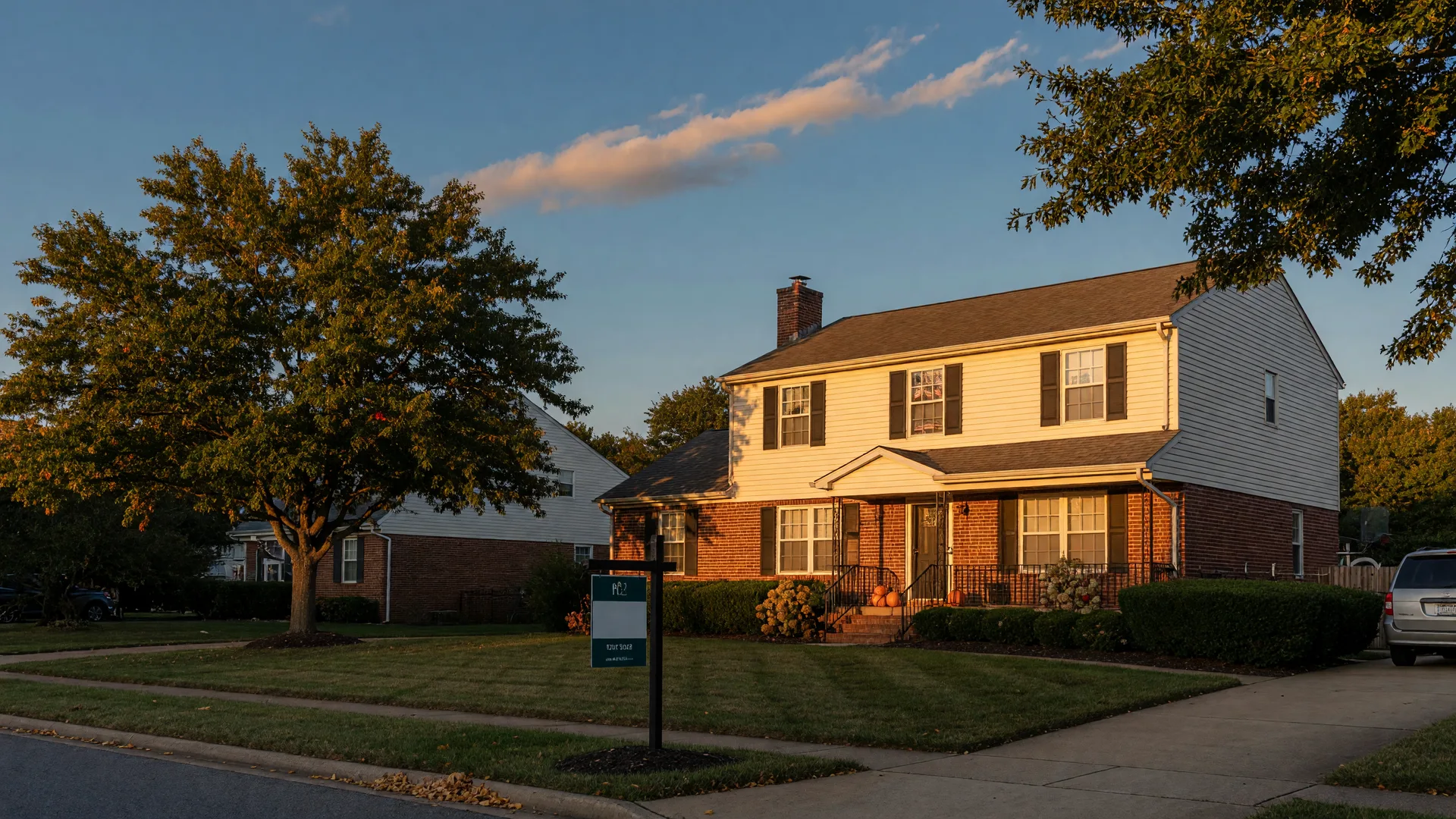

In a balanced market, the negotiation is where equity is won or lost. With the 30-year fixed rate at 7.32% and about one in three Triangle listings taking a price cut, buyers are negotiating harder than they have in years: closing cost credits, rate buydown requests, repair concessions, and financing contingencies are now routine parts of the conversation. This post is the playbook for that conversation: the specific requests Triangle sellers are seeing this fall, how to respond to each one, and why a zero listing commission changes the math at the settlement table.
The context is real and current. The 30-year fixed mortgage averaged 7.32% for the week ending October 22, 2026, according to Freddie Mac's Primary Mortgage Market Survey, easing from 7.40% the week before and still near its highest level in nearly three years. In Raleigh, the median sale price has come in around $445,000 over the last three months, roughly 6% below a year earlier, homes are taking about 46 days to sell, and active inventory has climbed to roughly four-year highs. Buyers have choices, they are comparing, and they are asking for more before they commit. The sellers who keep their equity in this market are the ones who treat the negotiation as part of the sale, not an afterthought.
Why buyers negotiate harder at 7.32%
Every point of mortgage rate removes buying power. At 7.32%, a buyer who could comfortably afford a certain payment at 6% is looking at a lower ceiling, and the gap shows up in the offer: a request for closing cost help, a contribution toward a rate buydown, or a price that starts below asking. None of it is personal. It is the buyer's payment math, and it lands on your side of the table as a request.
Add more inventory to that math and the balance tips further. With active inventory near four-year highs, buyers are not competing for the same three houses anymore. They are comparing a dozen, taking their time, and using the leverage that a balanced market gives them. The result is a negotiation that starts earlier, covers more line items, and ends with a net number that is decided by how well the seller's side responds.
The good news is that the playbook is predictable. Buyers ask for the same five things over and over, and each one has a disciplined response. That is what the rest of this post covers.
The five requests buyers make, and how to respond
Every negotiation this fall comes down to variations on five requests. Here is what each one looks like and how a disciplined seller handles it.
1. Closing cost credit
The most common request. Buyers at 7.32% are asking sellers to cover part of their closing costs, often $5,000 to $10,000 on a typical Triangle purchase, sometimes more. The response is not a flat yes or no, it is a trade: a credit that gets the deal closed can be cheaper than a relist, but it should be sized against the net, not granted by default. The counter is the number that keeps the deal alive while protecting your proceeds.
2. Rate buydown contribution
A growing request in a 7% world. Buyers ask sellers to contribute toward a temporary or permanent buydown that lowers their payment for the first year or two. A 2-1 buydown is a common structure: the rate is reduced for the first two years and returns to the note rate after. The contribution is real money, but it is often the difference between a buyer who can make the payment and a buyer who walks. Weigh it against what a relist would cost in time, price, and momentum.
3. Price reduction
The bluntest request. In a balanced market, a price reduction is usually a signal that the home is priced against the wrong comparables, not that the buyer is unreasonable. If the data says the price is right, hold the line with the evidence. If the listing has been sitting, the price was probably set before the market moved, and the honest move is to adjust to current comparable sales before the days on market do the adjusting for you.
4. Repair requests
After the inspection, buyers ask for repairs or credits. Some are legitimate, some are negotiation leverage. The play is to separate the two: safety and structural items get addressed, cosmetic wish lists get countered. A repair credit is often cheaper than the repair itself, and the right response depends on the item, the market, and how far along the deal is.
5. Dates and contingencies
Buyers at 7.32% are asking for longer inspection periods, financing contingencies, and flexible closing dates. The response depends on your timeline. The key is to protect your move dates and keep the financing contingency short enough that the deal does not drag. Every extra week a contingency stays open is a week your home is off the market with a deal that may not close.
Notice what these five have in common: none of them is a take-it-or-leave-it demand. Each one is a line item that gets negotiated against the net, and each one is easier to handle when the seller is not also negotiating from a listing that has lost its momentum. See how these line items quietly eat equity →
The launch is the first negotiation
The negotiation does not start with the first offer. It starts with the launch. In a market where about one in three Triangle listings takes a price cut, the homes that avoid the cut are the ones priced to current comparable sales on day one. A home listed a few percent above its realistic range gets scrolled past, generates a fraction of the traffic it should in the first two weeks, and then negotiates from weakness for the rest of its time on market.
The most expensive mistake in a buyer's market is emotional pricing: setting the price from what you need the home to be worth instead of what the last 90 days of sales say it is worth. The cheapest insurance is data-driven pricing at launch, backed by the full marketing program so the home is seen by the widest pool of buyers in the window when demand is freshest.
Homes that generate real demand in the first two weeks face fewer and smaller requests than homes that sit. That is not a coincidence. Buyers negotiate hardest when they sense a seller has no other options. A launch that produces multiple showings and competing interest changes the conversation from "what will you give me" to "here is my best offer." Why one in three Triangle listings cuts its price →
Negotiate the net, not the headline
When the offers arrive, the number on the page is not the number that matters. The net is: the price, minus concessions, minus credits, minus the fees on the settlement statement. A $500,000 offer with a $10,000 closing cost credit nets $490,000. A $495,000 offer with no credits and a strong pre-approval can net more, and close.
At 7.32%, financing strength matters more than it did in the low-rate era. Loans fall through more often, so the buyer's down payment, pre-approval, and realistic path to closing are part of the negotiation, not afterthoughts. An experienced negotiator knows which concessions are routine and which ones quietly eat your equity, and knows how to counter without scaring off a serious buyer. That is exactly what full-service representation is for.
The discipline is to evaluate every offer on the net number and the probability of closing, not on the headline. Sellers who do that consistently keep more equity, because they are never trading a real dollar for an impressive number.
How zero listing commission changes the negotiation
Here is where the model changes the outcome. In a traditional sale, the negotiation protects a number that then gets reduced by the listing commission at closing. On a $500,000 sale, a typical 3% listing commission is $15,000 that leaves the table after every concession is settled. With Zero Listing Commission, that line is not on the settlement statement. The listing commission is waived when you purchase your next home through Phil Slezak Real Estate, typically within 90 days of your sale closing, so every dollar preserved in negotiation is a dollar you keep, with nothing waiting at the end to take a cut.
So when a buyer asks for a $7,500 closing cost credit, the question is not whether you can afford to give it. The question is what the net looks like with the credit and without a listing commission, and whether the trade moves you forward. In a 7.32% market, that is the difference between a sale that funds your next move and a sale that funds everyone else's.
The same offer, two different nets
Illustration only. Commission rates are negotiable and not set by law. Figures use a typical 3% listing-side commission on a $500,000 sale for comparison. Actual credits, fees, and nets vary by transaction.
The same negotiation, the same buyer, the same credit, and a $15,000 difference in the net. That is not a discount on service. It is the full premium marketing program, full-service representation, and expert negotiation, with the commission line simply removed. Why zero commission is not a discount brokerage →
The questions Triangle sellers ask about negotiating
Do I have to accept a buyer's closing cost credit or rate buydown request?
No. Every request is negotiable, and no seller is obligated to say yes to any of it. The play is to weigh the request against the net and the alternatives: a credit that gets a serious buyer to the closing table can be cheaper than a relist, a price cut, and another 39 days on market. The team's job is to size every request against the number you actually walk away with, so you are never giving ground by default.
How much should I budget for concessions in a 7.32% market?
There is no fixed number, and anyone who quotes one without seeing your home and your market is guessing. Requests vary widely, from a few thousand dollars to 2% to 3% of the purchase price in competitive situations. The strongest defense is a launch priced to current comparable sales with the full marketing program, because homes that generate real demand in the first two weeks face fewer and smaller requests than homes that sit.
Is a lower offer with strong financing better than a higher offer with weak financing?
Often, yes. At 7.32%, financing failures are more common than they were in the low-rate era, and a high offer that cannot close costs you weeks, a relist, and negotiating leverage. A slightly lower offer with a large down payment, a solid pre-approval, and a short path to closing can be worth more in the end. That is a judgment call an experienced broker makes with the full picture, not a number you can read off the offer page.
Does zero listing commission mean I give up negotiation support?
No. Zero Listing Commission is full-service representation with the complete premium marketing program: professional photography, 4K video, drone footage, Zillow Showcase, a custom property website, glossy catalogs, targeted digital ads, and neighborhood campaigns. The negotiation is handled by an experienced broker on both sides of your move. The only thing missing is the commission line on your closing statement.
The bottom line
A buyer's market does not have to mean a seller loses equity. It means the sellers who win are the ones who price with data, launch with the full marketing program, and negotiate the net instead of the headline. In a 7.32% market, that playbook matters more than ever, and with zero listing commission, every dollar it preserves stays in your pocket.
It is the same playbook Phil Slezak's team has used across more than $200 million in career sales in the Greater Triangle and Brunswick County areas: total clarity, unfiltered local data, and zero risk, backed by a lifetime guarantee that puts your peace of mind first. The $15,000 question: what zero listing commission really puts back in your pocket →
1 in 3 Triangle Listings Cuts Its Price: How Yours Can Sell at Full Value
About 36% of Triangle listings take a price cut in a balanced 2026 market. Here is why price cuts happen, what you control in the first two weeks, and how zero commission keeps full premium marketing on your side.
The Hidden Costs of Selling in the Triangle: 5 Fees That Eat Your Equity
Beyond the commission line: buyer concessions, closing costs, carrying costs, and the overpricing tax can quietly remove five figures from your equity.
The $15,000 Question: What Zero Listing Commission Really Puts Back in Your Pocket
On a $500K sale, a typical 3% listing commission is $15,000 straight out of your equity. Here is what keeping that money means for Triangle sellers.
Browse all articlesRaise your hand for your negotiation playbook
If you are thinking about selling in this market, the next step is simple. Visit zerolistingcommission.com and raise your hand: request a free, no-obligation Equity Consultation with Phil and his team, and get a clear look at what your home is worth, what buyers are asking for in your neighborhood, and exactly how a zero-commission, full-premium-marketing plan keeps the most money in your pocket.
*Real estate commissions are fully negotiable and not set by law. Historical and illustrative commission figures are used for comparison purposes only and are not representations of past transactions. Market figures reflect public survey data current as of early October 2026. Zero Listing Commission listing fee waivers apply when you list and purchase your replacement home through Phil Slezak Real Estate, typically within 90 days.